
What Short-Form Content Is Doing To Your Brain
What happens to a brain raised on five-second videos and why it's harder to fix than you think

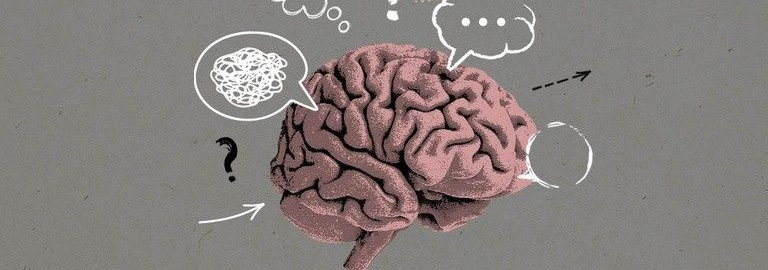
short-form content is the most consumed content on the planet right now.
and most people have absolutely no idea what it’s doing to them.
before we go any further i have one challenge for you.
read this post until the end.
this post is just over 2000 words.
your brain has been so conditioned by short-form content that reading 2000 words might actually feel difficult.
that should scare you.
test yourself. stay with it. let’s see if you can make it.
i’ve been reading about this for a long time.
the research and the neuroscience. all the psychological studies on attention and consumption habits.
and the more i read, the more unsettling it gets.
black coffee on the desk. no music today, wanted silence while writing this one.
short-form content took its real rise somewhere around 2020.
it existed before that. vine was doing it. musical.ly before that. but then tiktok came in and changed the game permanently.
because once tiktok proved how addictive short-form content could be, every single platform followed.
instagram created reels.
youtube created shorts.
facebook. twitter. snapchat. all of them scrambling to implement the same mechanism.
not because it was better for the users and they cared about them. they did it because it was better for them.
more scrolling means more ad impressions means more money.
they figured out the cheat code and they exploited it.
and now here we are.
SHORT-FORM CONTENT IS MAKING YOU SHORT-FORM MINDED
"The mind is not a vessel to be filled but a fire to be kindled." — Plutarch
i’ve seen this talked about before so i thought i’d give my two cents.
our generation has been so overexposed to short-form content that we’ve genuinely adapted to expect everything to be conveyed through a short-form lens.
and that’s a serious problem.
because some things intrinsically require nuance, depth, time, and actual dedication to unpack.
political conflicts. philosophy. psychology. history. neurology. any of the humanities really.
you cannot understand these things in a two-minute video.
you just can’t.
but people think they can.
i posted one of my substack articles on tiktok a few months back.
it got quite a bit of engagement and guess what?
and one of the top comments, sitting on a thousand likes itself, was:
“i’m not reading all that.”
that is how fucked peoples attentions spans are.
an article that took me hours to research and write. that contains actual depth and nuance and information that a two-minute video could never hold.
and the most liked response was i’m not reading all that.
the second most liked comment was something along the lines of “you could use fewer words.”
people genuinely believe that everything worth knowing can and should be communicated in the shortest possible format.
and our actual interfaces reinforce this.
we can watch tiktoks at two times speed now.
people consume content at double speed like it’s a feature, not a symptom of how thoroughly their patience has been destroyed.
then when they encounter something that actually requires them to read, to sit with, to work through slowly, they just bail.
now look. i’m not going to pretend short-form content is purely a negative.
it’s exposed people to ideas they would never have found otherwise. introduced concepts from psychology, philosophy, science, politics to audiences who weren’t seeking them out.
that’s genuinely valuable.
but the understanding that comes with it? surface-level at best.
you hear people give arguments they found on tiktok, confidently, with genuine conviction, and then you ask them to go one layer deeper and they just stop.
“i don’t know, i just saw a video about it.”
they never actually took the time to understand it. they watched seventeen tiktoks on the same topic and mistook familiarity for understanding.
they’re regurgitating information they absorbed passively, from a 45-second clip, on a topic that people have spent entire careers studying.
and the greater issue is that the expectation has shifted.
people now expect everything, no matter how complex, to be consumable in a short amount of time.
we’re not doing the heavy lifting anymore. not going into the deep dives. not sitting with something long enough for it to actually land.
this is how we get people starting podcasts, entering debates, talking confidently about topics they fundamentally don’t understand.
because they watched enough tiktoks on it to feel like they do.
politics is the most obvious example.
how many people’s political opinions are shaped entirely by a video they saw online?
the internet has sorted everyone into echo chambers, and short-form content amplifies this to an extreme degree.
you see the most emotionally triggering version of whatever confirms what you already believe, on repeat, at scale, and your opinion hardens without ever having been genuinely challenged.
i’m actually writing a post right now on why people believe obvious lies as though they’re absolute truths. it goes deep into this, and it’s genuinely one of the more fascinating things i’ve studied. that one’s coming soon.
but the point is this.
the fruit of real knowledge and real intellectual development is time and patience.
you have to sit with something. you have to be confused by it. you have to read the thing that disagrees with what you think. you have to let it develop slowly.
short-form content trains you to expect the opposite of all of that.
WHAT IT’S ACTUALLY DOING TO YOUR BRAIN
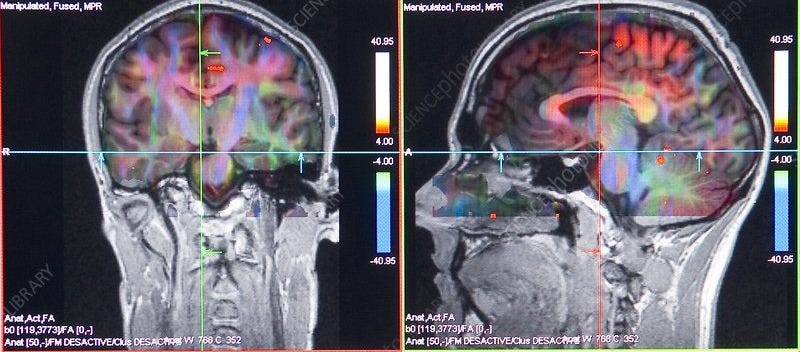
here’s the neuroscience.
every time you scroll and a new video loads, your brain releases a small pulse of dopamine.
not from the content itself but from the anticipation of it.
the half-second before the next video plays. that tiny moment of “what will this be?”
that’s your brain on a neurological slot machine.
same mechanism as gambling. same mechanism as pulling a lever.
variable reward. unpredictable outcome. maximum dopamine response.
tiktok didn’t stumble onto this by accident. the algorithm was designed to maximize the unpredictability of what comes next, because unpredictability is what keeps the dopamine loop running.
and the more you feed that loop, the more your brain recalibrates around it.
your prefrontal cortex, the region handling sustained attention, impulse control, and deep cognitive work, gets progressively weakened by short-form content consumption.
you become more impulsive.
every time you feel boredom or discomfort and immediately reach for your phone, you’re training your prefrontal cortex that discomfort is intolerable and must be immediately resolved.
you’re building a neural pathway that says “stillness is dangerous. boredom is dangerous. anything that doesn’t stimulate me every few seconds is to be avoided.”
and those pathways get myelinated the more you repeat the pattern.
meaning they get faster.
more automatic.
harder to override.
this is why people who are deep into short-form consumption find reading genuinely difficult.
they’re not stupid it’s just that their brain has been literally rewired to resist sustained attention.
anything that doesn’t deliver a dopamine signal every eight seconds registers as boring and as slow. as not worth it.
your baseline for what counts as stimulating gets recalibrated upward continuously.
and real life, real work, real conversations, real books, none of them can compete with something engineered in a lab to be maximally stimulating at all times.
so they start to feel grey.
flat.
not worth the effort.
THE CONSUMPTION VS CREATION TRAP
"We are drowning in information but starved for knowledge." — John Naisbitt
most short-form content is what people like to call mental masturbation.
motivation clips. success porn. entrepreneurship content. fitness transformation videos. whatever your into shown at the highest level.
people watch it, feel something for eight seconds, then move to the next one.
no action taken and no actual progress.
just the feeling of improvement without any of the work.
and the brain can’t tell the difference.
your dopamine system responds to watching someone describe building a business almost the same way it responds to actually building one.
which means you can spend two hours watching productivity content and walk away feeling like you did something productive.
you didn’t.
you just borrowed someone else’s progress and felt it as your own for a few minutes.
this is one of the more insidious things about short-form consumption specifically.
because the content is designed to give you an emotional hit. inspiration. outrage. validation. humour.
you feel things. real feelings. and feelings, in your brain’s accounting system, register as experiences.
so you feel like your day was full. like you engaged with the world. like you learned things and felt things and were present.
but you consumed 600 pieces of content and retained almost none of it.
your day disappeared into a void of five-second videos and you called it unwinding.
THE ATTENTION SPAN ECONOMY

there’s a reason every major tech company reports engagement metrics, not satisfaction metrics.
engagement means time on platform.
time on platform means ad revenue.
whether you enjoyed that time, whether you came away feeling better, whether you learned something valuable, none of that shows up in the spreadsheet.
what shows up is how long you were there.
and the most effective way to keep you there is to keep you in a state of low-grade compulsion.
not happiness. not satisfaction.
compulsion.
the feeling that you might be missing something if you stop.
that the next video might be the one that finally satisfies you.
it never is.
you can’t scratch this particular itch.
and that’s not a bug. that’s the business model.
your deteriorating attention span is someone else’s revenue stream.
your inability to sit with a book for thirty minutes is measurable engagement on their platform.
the companies won a long time ago. most people just haven’t noticed because the loss happened gradually, one scroll at a time.
WHAT YOU CAN ACTUALLY DO
i’ve already written multiple posts on the neuroscience of rewiring habits so i’m not going to walk you through a step-by-step protocol here.
but i will say this honestly.
a lot of you are addicted to short-form content.
not addicted in a casual way. genuinely neurologically conditioned to need it.
and you can’t just stop cold turkey any more than someone can white-knuckle their way out of any other dopamine dependency through willpower alone.
so here’s the most realistic starting point.
replace short-form with long-form.
that’s it. that’s the beginning.
instead of ten minutes of tiktok, watch a ten-minute youtube video.
instead of reels, put on an actual show or a film.
it’s still consumption. i’m not telling you to delete everything and become a monk.
but sustained attention, even passive sustained attention, is fundamentally different for your brain than the slot machine scroll.
when you watch a ten-minute video your brain is holding narrative, tracking context, building toward something.
when you scroll short-form your brain is just reacting.
stimulus response. stimulus response. on repeat.
long-form content keeps the attention circuits active.
short-form content slowly switches them off.
make it as long as possible. make it as information-rich as possible. let it tell a story.
and then once that becomes comfortable, replace some of the passive consumption with creation or reading.
even twenty minutes of reading something that challenges you is doing more for your cognitive architecture than two hours of anything designed to be consumed in under thirty seconds.
your attention span is not gone.
it’s just been trained in the wrong direction.
and what was trained can be retrained.
but you have to actually want it back.
THE BOTTOM LINE
short-form content is the most consumed content on the planet.
it’s also been the most effective tool ever created for the systematic destruction of human attention spans, depth of thought, and the ability to sit with complexity.
your brain is genuinely different than it was five years ago because of it.
the way you approach knowledge. the way you consume information. the way you engage with things that require patience.
all of it has been quietly shifted.
not by accident.
by design.
the question is whether you care enough to shift it back.
if you made it to the end of this post i want you to drop a comment with the word ‘attention’. just curious to see how many people truly did make it.
salute to you.
your brain still works.
now go do something with it.
ps. check out some of my other posts.
the rabbit hole goes deeper. come find it.


Attention.
I personally deleted tiktok, snapchat and IG when crossing over to the new year.
I read Ebooks during my free time now and I genuinely feel the difference.
My memory has improved, I appreciate the world and nature more.
I am happier and I have been trying to spread the word.
It actually is these damn phones!
When you talked about building a neural pathway that send signals like “stillness is boring” when the need for the dopamine release every 8 seconds kicks in, I wondered what relation that also has to ADD or ADHD. If the pathways get myelinated the more you repeat the pattern and people who consume short form content deeply have a hard time reading because their brain is wired for the constant release, I just wonder what that means for those with Attention Deficit Disorders. Assuming they more likely to be consuming short form ?? So many questions, love this!! - Attention
I did some research on the topic yesterday and wrote my own article on it if anyone’s interested!
https://substack.com/@brinebasalt/note/c-228811731?r=4ozb3i&utm_medium=ios&utm_source=notes-share-action