
Why Modern Relationships Collapse After 6 Months
The neuroscience of constant communication, the psychology of dating apps, and why the infrastructure we've built around love is designed to destroy it


your phone buzzes.
they texted you good morning with three heart emojis.
you smile. you text back immediately.
this continues all day. every day.
and somewhere in the middle of that routine you started calling it love.
your nervous system gets a little hit every time that notification comes through. a small pulse of something that feels warm and good and like proof that someone is thinking about you.
you start to need it.
not them necessarily but the hit.
and the moment it slows down, the moment they take two hours to reply instead of two minutes, something in your chest tightens. you check the phone again. you wonder what changed. you wonder what you did.
that anxiety you’re feeling?
that’s a dependency that has been mistaken for love.
we have built an entire generation’s experience of romance on dopamine loops and manufactured intimacy and then acted confused when nothing lasts past six months.
love grows in silence.
real desire needs distance to build.
real connection happens in the spaces between words, not in the constant filling of them.
but nobody is teaching this. the apps aren’t designed for it. the culture isn’t rewarding it. so people keep doing what they’ve been shown and keep ending up in the same place wondering where the spark went.
the spark didn’t go anywhere it was just smothered before it ever had the chance to breathe.
black coffee with raw honey sits on my desk, steam filling the room with that familiar bitter warmth.
vagabond is open on the desk next to me, was reading it last night before i fell asleep. frank sinatra plays low through the speakers and i can hear birds outside. that specific combination of things that makes early morning feel like it belongs to you.
i decided to write this post after a conversation with a friend of mine. she’s in her early-twenties and has had trouble not only staying in a relationship but finding one that feels real in the first place.
she was venting about how everything felt so superficial. every interaction, every app, every conversation that started with promise and fizzled into nothing.
and i told her yeah. you’re right. everything is built and designed to be superficial.
and that’s the actual problem.
let’s get into it.
THE CONSTANT COMMUNICATION EPIDEMIC
"Absence sharpens love, presence strengthens it." — Thomas Fuller
think about having a crush when you were younger.
you’d see them for a few hours at school then go home and think about them for the rest of the day.
you’d wonder what they were doing. whether they thought about you too.
that wondering was desire building in real time.
now? you know exactly what your crush had for breakfast because they either told you or posted it.
you know they’re bored because they’re sending you random memes at 2pm.
there’s nothing left to wonder about.
and when there’s nothing to wonder about there’s nothing to desire.
mystery is the oxygen that desire breathes.
and we have systematically eliminated it.
your grandparents didn’t text each other forty times a day.
they had dinner. talked about their day and that was it.
and they stayed together for sixty years. now relationships die after six months because “the spark is gone.”
the spark isn’t gone, it was just smothered.
WHAT CONSTANT COMMUNICATION DOES TO YOUR BRAIN

there’s actual neuroscience behind why this is happening.
it’s not just a ‘vibe’ or ‘romantic philosophy’.
every time your phone buzzes with a message from someone you’re interested in, your brain releases a small hit of dopamine.
the anticipation before you open it. the relief when it’s positive or the tiny anxiety when it isn’t.
this is the same variable reward mechanism that makes slot machines addictive.
you don’t know if the message will feel good or neutral or slightly anxiety-inducing.
the unpredictability is what keeps the loop running.
and over time your brain starts associating the relationship itself with this dopamine loop rather than with the actual person.
the relationship becomes a dopamine delivery system.
which means the moment the dopamine slows down (the moment communication becomes less frequent or less intense) your brain interprets that as the relationship dying.
because for your neurochemistry, they’re the same thing.
this is why people in constant communication relationships panic when someone takes a few hours to reply.
the anxiety isn’t really about that person.
it’s dopamine withdrawal.
and it gets worse.
the constant contact also prevents the neurochemical conditions that genuine desire requires.
desire needs distance to build.
oxytocin (the bonding hormone) releases most powerfully during reunion after absence.
think about how good it feels to see someone you’ve genuinely missed.
that feeling is oxytocin doing exactly what it evolved to do.
but if someone never really leaves, if they’re always there in your pocket sending memes, then there’s no absence to create the conditions for that release.
you’ve replaced deep periodic reconnection with shallow constant contact.
and your nervous system is bored even if your anxiety is through the roof.
WHAT REAL LOVE ACTUALLY LOOKS LIKE
when you’re together, be fully together.
when you’re apart, be fully apart.
this is what every lasting relationship that has ever existed has understood at some level.
absence makes the heart grow fonder because it works at a neurobiological level not just a poetic one.
the people who need constant communication don’t feel worthy of being missed.
deep down there’s a subconscious fear that if they’re not constantly reminding someone of their existence, they’ll be forgotten.
but people worth loving remember you in your absence.
they carry you with them.
they think of you during quiet moments without needing a notification to prompt it.
that’s the difference between anxious attachment and real love.
one requires constant feeding.
the other grows stronger in silence.
one is desperate and clinging.
the other is secure enough to exist in the space between conversations.
give love that space.
and watch what actually blooms.
DATING APPS AND THE ARCHITECTURE OF DISAPPOINTMENT
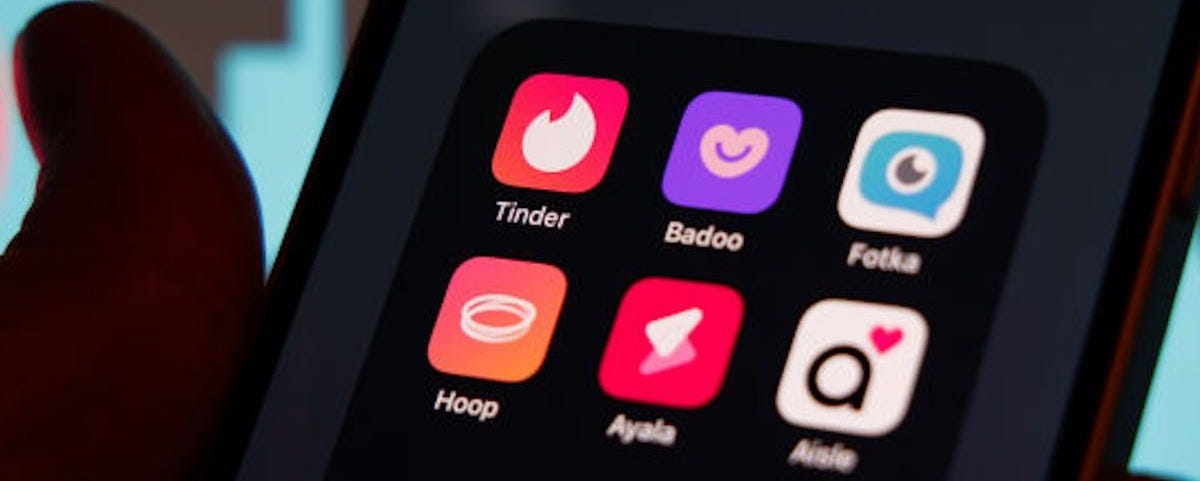
i have never been on a dating app and i never will be.
not because i’m a snob about it.
because i’ve looked at how they’re built and i genuinely think they’re one of the worst possible foundations for something you actually want to last.
and the data backs this up.
despite dating apps now being the number one way heterosexual couples in the US meet, the conversion rate from match to long-term relationship is somewhere around 1%.
one percent.
you could make an argument that almost any other way of meeting people has a higher success rate than that.
and it makes complete sense when you understand what dating apps are actually doing.
THE ARCHITECTURE OF A DATING APP
here’s what a dating app actually is.
you get one page.
your best five photos, carefully selected.
two sentences that are somehow supposed to communicate the full depth of who you are as a human being.
and someone else’s thumb deciding in approximately one second whether you are worth their time.
this is genuinely dystopian.
it’s the kind of thing you’d see in a black mirror episode and think yeah that’s a bit much.
but it’s how millions of people are trying to find love right now.
the entire interaction is built on conditions.
conditions that had to be met before the conversation even starts.
the photos had to hit right. the bio had to land. the thumbnail had to be interesting enough.
and here’s what happens once those conditions are met.
the person on the other side of the screen doesn’t actually know you.
they know your curation.
they know the version of you that was assembled with intention, with your best light, your most interesting anecdote, your most flattering angle.
and their brain, because this is what human brains do, takes that curation and fills in the gaps with a fantasy.
subconsciously they build a model of who you are based on the best possible interpretation of the information available.
and that model is often better than reality.
not because you’re a bad or boring person.
it’s because no one is as good as a fantasy.
so when you actually meet, when the real person shows up with their actual energy and their weird habits and the things that don’t match the curation, the model breaks.
and when the model breaks, the interest evaporates.
it’s a predictable psychological consequence of the architecture.
the foundation was always going to collapse because it was built that way.
THE PSYCHOLOGICAL TRAP BUILT INTO THE DESIGN
“We accept the love we think we deserve." — Stephen Chbosky
dating apps are not designed to get you into a relationship.
they are designed to keep you on the app.
there’s an important distinction there.
if you find someone and leave, that’s a lost user.
the business model requires you to stay engaged, to keep swiping and to keep experiencing just enough success to stay hopeful and just enough failure to keep searching.
the variable reward mechanism once again like i mentioned before.
maybe the next swipe will be the one.
it almost never is.
but maybe.
match.com’s own internal research once showed that couples who met online were more likely to break up in the first year than couples who met offline.
a 2022 study published in the proceedings of the national academy of sciences found that marriages that began online reported lower satisfaction and higher rates of infidelity than those that began offline.
there’s also the paradox of choice problem.
when you have access to thousands of potential partners at your fingertips commitment becomes neurologically harder.
your brain knows there’s always another option a swipe away.
and that knowledge (even when you’re not consciously acting on it) undermines the psychological safety that real intimacy requires.
commitment asks you to choose one person and close the other doors.
dating apps keep all the doors open indefinitely.
those two things are fundamentally incompatible.
THE FAKE PERSON PROBLEM
this isn’t 2015 anymore.
the landscape of dating apps has shifted in ways that make the already low success rates even more grim.
estimates suggest that anywhere between 10 and 30 percent of dating app profiles are fake or bot-operated depending on the platform.
some platforms have faced lawsuits over the scale of fake engagement used to keep real users active and subscribed.
you could be having a conversation that feels like it’s building toward something with a profile that doesn’t represent a real person.
you could be developing an emotional investment in something generated.
it’s a structural feature of an industry that profits from engagement regardless of whether that engagement is real.
I’M NOT SAYING NEVER
look. i’m not saying dating apps are evil or that nobody has ever met someone real on them.
people have. people do.
but the odds are genuinely terrible and more importantly the psychology of how they work is almost perfectly misaligned with what actual lasting relationships require.
they are built for novelty and instant assessment.
love is built for depth and sustained attention.
they optimize for the initial hit of attraction.
relationships survive on the stuff that comes after that.
a lot of the time spent on dating apps is wasted time.
real time, real energy, real emotional investment going into an architecture that was never built to deliver what you actually want.
the irony is that the thing most people are looking for, genuine connection, real chemistry, the feeling of being actually known by another person is almost impossible to access through a medium that reduces you to a thumbnail and a swipe.
THE ACTUAL PROBLEM
constant communication and dating apps are symptoms of the same underlying shift.
we want connection but we’ve replaced the conditions that create it with substitutes that feel like connection and function like addiction.
the dopamine hit of a good morning text is not intimacy.
the dopamine hit of a new match is not chemistry.
they feel similar enough that we accept them as replacements.
and then we wonder why nothing lasts.
real connection requires presence.
it requires patience.
it requires the willingness to sit in silence with someone and not reach for your phone.
it requires meeting people in contexts where real personality emerges, not curated pages.
it requires letting mystery exist.
it requires enough security in yourself that you don’t need constant reassurance to believe someone wants you.
none of that is built into the infrastructure we’ve handed to an entire generation as the primary tools for finding love.
and until we understand that, the relationships will keep collapsing at six months.
the spark will keep dying.
and nobody will understand why.
ps. if you want the neuroscience, the psychology, the frameworks that actually change how you see yourself and the world around you, that’s what’s on the other side.
most people aren’t ready to go that deep.
if you are, come find it. click this to upgrade or try the button below:


click this to access the full archive of premium posts
mystery is the oxygen that desire breathes. Damn so true.
This is a devastatingly accurate breakdown - I love the way you lay it out so plainly and without apology.
What is more, the way you’ve connected the dots between dopamine loops, constant communication, dating-app architecture, and the death of real desire is sharp and unflinching. That line about replacing deep periodic reconnection with shallow constant contact… that’s the quiet murder of intimacy right there. Too many people have traded mystery for notifications, absence for availability, and wonder for reassurance - and then the modern lover is shocked when the relationship feels empty after six months.
The neuroscience is clear: variable reward + no distance = addiction, not attachment. Desire needs space to breathe; love needs silence to deepen. We’ve removed both, then wondered why nothing grows.
Your point about the fear of being forgotten if we’re not constantly reminding someone of our existence - that one lands hard. It’s anxious attachment dressed up as romance. The healed version of love doesn’t need the phone to buzz every hour to know it’s wanted. It trusts the quiet.
I’m grateful for the clarity and the courage here. It’s the kind of piece that makes people pause and actually feel the cost of what we’ve normalized.
Keep writing this way - it cuts through the noise like almost nothing else.
With real respect,