
The Illusion Of Progress
Understanding why reading self-improvement content can make you worse

around new year’s i wrote a post on neuroplasticity that i was working on for a while and it happened to reach a very large audience.
i had a lot of messages flooding in. “this changed my life.” “finally understand why i keep failing.” “needed to hear this.”
and i genuinely appreciate everyone who read it and got something from it.

but honestly here’s what i know is actually happening with a lot of people who read it.
90% of you who said “this changed my life” are going to do absolutely nothing with the information.
i’m not trying to be an asshole. just being honest because i was the exact same way for years and there’s a reason behind it.
you read the post and felt that surge of motivation. got that mental high from understanding something new.
your brain lit up with possibility. “oh shit, this makes sense. i’m gonna apply this.”
and then... nothing.
you likely went right back to your patterns. the post is bookmarked somewhere in a folder you’ll never open again.
because consuming information about change feels exactly like changing.
your brain gets the same dopamine hit from understanding the mechanism as it would from actually doing the work.
so you feel like you made progress when really you just consumed content.
i know this because i spent years doing it.
watching motivational videos and reading self-improvement books. listening to podcasts about discipline and success.
i felt incredible while i was doing it. felt like i was growing and improving.
but my actual life? not changing at all.
same habits and same patterns stuck with me.
i knew what to do, but for some reason i wasn’t fucking doing it.
and the reason?
because i was feeding my brain the illusion of progress through consumption.
and your brain doesn’t distinguish between thinking about doing something and actually doing it as clearly as you’d think.
which brings me to what i actually wanted to write about today.
why thinking about change can actually prevent change from happening.
think of this as a part 2 to the neuroplasticity post, a follow up or kind of a check in.
black coffee today, nothing added this time wanted to feel that bitter and harsh taste. an acquired taste.
it’s a early morning around 6:46am. that weird quiet before the city wakes up fully.
this phenomenon has plagued me for years and i know it affects many other.
how people can spend years learning about improvement without improving.
how mental simulation hijacks the change process.
and the neuroscience behind it is fucking fascinating.
so let’s get into this.
YOUR BRAIN CONFUSES INTENTION WITH ACTION
"An ounce of action is worth a ton of theory." - Ralph Waldo Emerson
when you think about doing something, your brain activates a lot of the same neural circuits as actually doing it.
this is why mental rehearsal works for athletes. visualizing a movement pattern strengthens the motor circuits involved.
but it also creates a problem.
when you think about changing, plan how you’re going to change, visualize yourself being different, your brain releases dopamine.
same reward chemical you’d get from actually doing the thing.
so you get a hit with a little bit of satisfaction from the intention alone.
and once your brain gets that dopamine, the motivation to actually follow through drops.
you already got the reward. why do the work right?
this is why telling people about your goals can actually make you less likely to achieve them.
studies have shown that when you announce a goal, you get social validation and a dopamine spike from the announcement itself.
your brain treats that validation as partial completion of the goal.
so you’re less motivated to actually do it because you already got some of the neurological payoff.
people who keep their goals private and just quietly work on them tend to achieve them more often.
it’s the reason you hear people say ‘move in silence’
it works because they haven’t given their brain a reward for intention.
the only way they get dopamine is through actual progress.
let the results speak for themselves.
WHY PLANNING FEELS PRODUCTIVE BUT ISN’T

planning activates your prefrontal cortex because you’re thinking strategically and organizing information. you’re creating a framework essentially.
and it feels like work. feels productive as hell because your brain is engaged and active.
but be honest for a second, you’re not actually changing anything.
you’re activating thinking circuits, not action circuits. sitting and writing shit down in a journal is going to do absolutely nothing UNLESS you act on it.
and the more time you spend in planning mode, the more your brain treats the planning as the thing itself. a slippery slope you don’t want to fall down, trust me i’ve been down it.
i used to have elaborate systems for productivity but never actually produced anything.
notion dashboards with color-coded tags and templates. detailed morning routines written out with goals broken down into sub-goals into sub-sub-goals.
i spent hours optimizing the system and felt like i was making leaps of progress.
but i wasn’t writing, building, creating, doing anything. i was just... planning.
their brain is getting stimulation and reward from the planning process. so there’s no neurological pressure to actually execute.
this is the trap of productivity porn. consuming information about being productive instead of being productive.
reading about how successful people structure their day instead of structuring your own day.
your brain can’t tell the difference between learning about discipline and being disciplined.
both activate similar circuits. both feel effortful and produce some dopamine.
but only one actually changes your life.
WHY READING ABOUT DISCIPLINE MAKES YOU WEAKER
"Knowledge is of no value unless you put it into practice." - Anton Chekhov
here’s something that fucked me up when i first understood it.
consuming self-improvement content can actually make you less likely to improve.
because you’re training your brain that consuming = improving.
every time you read an article about discipline, watch a video about motivation, listen to a podcast about success, you’re reinforcing a neural pattern.
the pattern is: “thinking about improvement makes me feel good.”
and your brain optimizes for feeling good. so it starts craving more content about improvement.
not actual improvement. content about improvement.
you become addicted to the mental stimulation of learning how to change without the discomfort of actually changing.
this is why some people can read hundreds of self-help books and still be stuck in the exact same place.
they’re not lacking information. they’re addicted to information as a substitute for action.
and every book they read or every article they consume, strengthens that substitution pattern.
they feel like they’re doing something and their brain rewards them for it. but nothing in their actual life changes.
i did this for years with fitness content.
watched endless youtube videos about workout programming, nutrition science, optimization strategies, perfect form videos.
felt like i was learning so much. felt productive.
but my actual body? not changing because i wasn’t consistently training. i was consistently consuming content about training.
and my brain was getting enough satisfaction from the consumption that i didn’t feel the push to actually do the work.
imagine we give two people 3 months to learn how to drive a car.
person 1 spends those 3 months getting in the car, driving on the streets and fuck maybe even crashing once or twice
person 2 spends those 3 months reading about driving, the perfect angle to turn, the mechanics of steering, how cars work and everything.
at the end of those 3 months who going to be the better driver?
MENTAL SIMULATION VS MOTOR EXECUTION
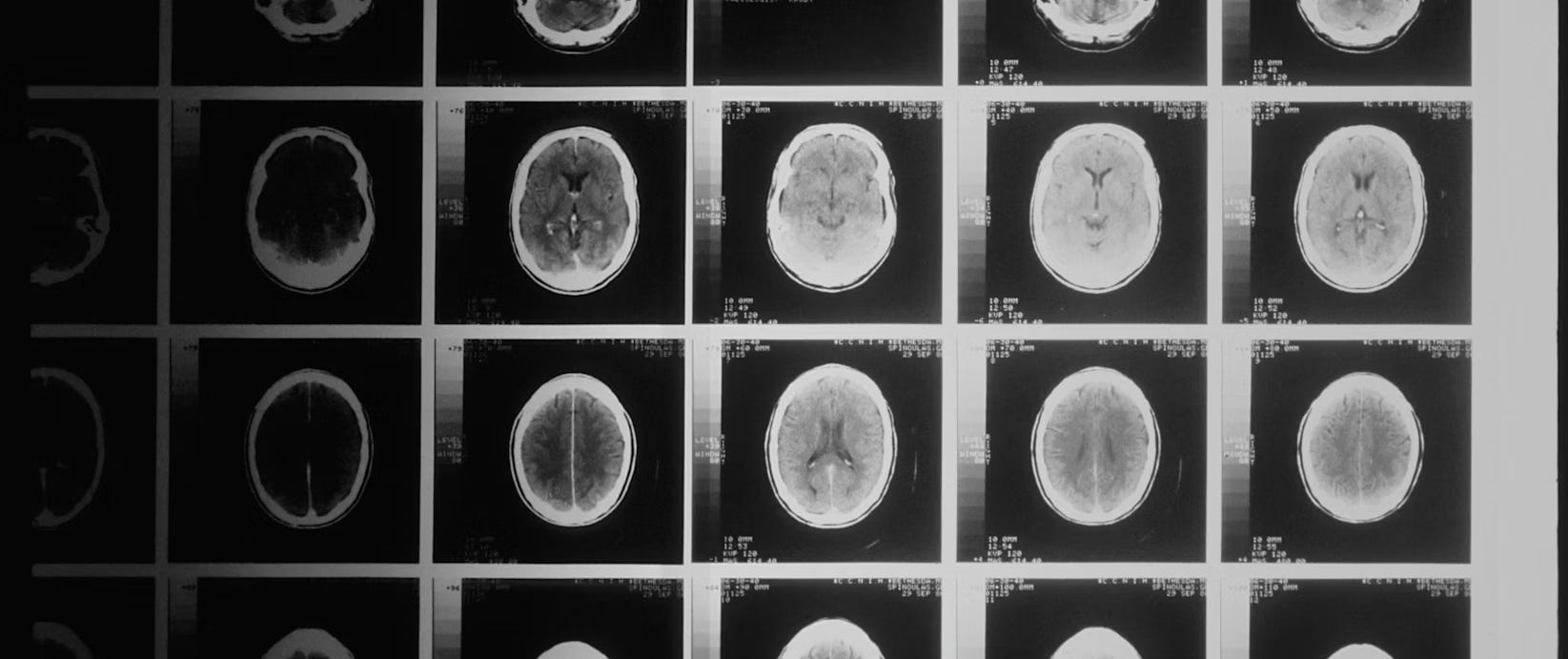
neurologically, there’s a difference between thinking about doing something and doing it.
when you think about an action, you activate premotor and supplementary motor areas. your brain simulates the movement.
when you actually do the action, you activate primary motor cortex. you execute the movement.
both feel like effort because they both engage your brain.
but only execution builds the actual neural pathways you need.
this is why visualization alone doesn’t create change.
i talked about the law of detachment a few days ago, and i’m currently finishing up a post about the law of attraction.
people think the law of attraction is just ‘think of it and it will magically happen’ when that couldn’t be more fucking wrong.
you have to use the ‘thinking’ as supplementation to the action.
athletes use visualization as a supplement to training, not a replacement.
they visualize the movement, then they execute it hundreds of times. the combination works.
but if they only visualized and never actually trained? they’d suck.
their brain would have a simulation of the skill but no actual motor learning.
same principle applies to any change.
you can think about being disciplined all day. simulate scenarios where you make good choices and plan how you’ll handle challenges.
but if you never actually execute in real situations, you’re not building the pathways.
you’re just strengthening your ability to think about executing.
which is not the same thing.
WHY SILENCE + REPETITION BEATS STRATEGY
"Stop talking. Start walking." - L.M. Heroux
the people who actually change are usually the ones who talk about it the least.
they’re not posting about their journey or announcing their goals
they just quietly do the thing. over and over. without much fanfare or anyone to say anything.
and their brain only gets dopamine from actual execution.
so execution becomes the pattern their brain optimizes for.
no mental shortcuts, no reward from thinking, only reward for action.
this is harder. way fucking harder i can’t even put into words how hard this shit is.
because you don’t get the satisfaction of feeling productive through planning or the validation of announcing your goals.
you have to sit with the discomfort of just doing boring repetitive work without any immediate payoff.
but you must understand this is what actually rewires your brain.
repetition without mental stimulation and action without strategy.
just showing up and doing the thing until it becomes automatic.
your brain eventually builds the pathway because there’s no alternative circuit getting reinforced.
THE CONSUMPTION TRAP
if you’re reading this post, you’re probably someone who consumes a lot of self-improvement content.
and there’s nothing wrong with that, i don’t want you to read this and think self-improvement or self-help content is the devil or something, to be honest we all need to consume something in our day to day lives.
if you’re going to consume, might as well let it be content that can help you.
but my point is this…
substack can be a dangerous platform especially, you start doomscrolling on this app and think you’re any better then people doomscrolling on tiktok or instagram.
but be honest with yourself. there’s a decent chance that consumption has become a substitute for actual improvement in your life.
you feel productive when you’re learning. you feel like you’re growing when you’re consuming.
but your actual behaviors? probably haven’t changed much.
you know way more about discipline than you actually practice.
you understand neuroplasticity but you’re not leveraging it.
you’ve read about habit formation but your habits are still shit.
and every post you read or every video you watch, reinforces the pattern of consumption-as-progress.
your brain gets a hit, feels satisfied and moves on.
no actual change required.
i don’t want this to feel like a shot towards any of you, honestly i say this out of best interest for everyone who reads my stuff.
i’m not saying don’t consume content. obviously i want you to read this and continue to read and consume helpful/useful content.
i’m saying be honest about whether consumption is leading to action or replacing it.
take a moment and reflect on if you’re using consumption as a distraction.
if you’ve read ten articles about waking up early but you still hit snooze every morning, the articles aren’t helping.
they’re just giving you the illusion of working on the problem.
if you’ve watched hours of videos about productivity but you’re still procrastinating on everything important, the videos are part of the problem.
they’re satisfying your brain’s desire to feel productive without requiring actual productivity.
so consume the content, the content itself is not bad neither is you seeing it but act on it. ACT on it.
WHAT ACTUALLY WORKS
stop consuming and start executing.
i know that’s not satisfying advice. you probably want a strategy, a framework, a system, something to follow.
but wanting strategy is part of the trap. strategy is mental simulation. it’s planning. it’s thinking about doing.
you don’t need more information. you need more repetition.
pick one behavior and do it today.
don’t think about it. don’t plan it. don’t optimize it. just do it.
then do it again tomorrow. and the day after. and the day after.
no tracking system and no posting about it.
just silent, boring, repetitive execution.
your brain will hate this. it’ll try to pull you back into planning mode and strategy mode.
because those modes feel more engaging. they provide more immediate stimulation.
but they don’t build the pathway.
only execution builds the pathway.
and you need to build the pathway through sheer repetition until your brain has no choice but to make it automatic.
that’s it. that’s the whole thing.
everything else is mental masturbation.
THE REAL TEST
the only thing that matters is what you actually do after you close this tab or what you do after reading this.
not what you think about doing. not what you plan to do. what you do.
if you do something, anything, even something small - you’ve applied it.
if you just think about it, bookmark it, or tell someone about it, you’ve missed the entire point.
and i’ll be honest, most of you will miss the point.
you’ll feel good reading this. might even have that “oh shit” moment of recognition.
then you’ll go right back to consuming content about change instead of changing.
and that’s fine. i’m not judging.
i did it for years.
but at some point you gotta ask yourself… do i actually want to change? or do i just want to think about changing?
because your brain will happily let you think about it forever.
thinking feels productive. thinking gives dopamine. thinking is safe.
actually doing the thing? uncomfortable. uncertain. no immediate reward.
but it’s the only thing that actually works.
so what’s it gonna be?
gonna close this tab and go do something? or gonna open another article about doing something?
your brain already knows which one feels better.
question is whether you’re gonna let that feeling run your life.
ps. get access to posts breaking down dopamine hijacking, trauma and the nervous system, psychological warfare tactics, power dynamics, environmental influence on identity, all the neuroscience and psychology behind why you do what you do and how to actually change it. $7/month gets you access to everything. but real talk, if you're just gonna read those posts and do nothing with them either, save your money. only upgrade if you're actually ready to execute, not just consume more content. click this if you're looking to upgrade or try the button below:
check out some premium content:


+many more
I usually get stuck in the “planning” cycle and don’t end up acting because I already got all the dopamine. Thank you for explaining it so clearly!
Alright, time to get off the app and actually do the thing I said I’d do today (this time acting, not planning the action). Thanks for the reminder!
Great post! Thank you for your wonderful posts.Like you I’ve wasted many good hours on self help and yes action is the language of Gods. But there is also a deeper question we need to ask of ourselves when seeking change. That is why do I want to change and who is the old self and what do I want the new self to be! We need deeper excavations that make us commit to change.